Blog
Looking along in Spain: what Crescendo CVO learned from vocational education in Soria. 12/05/2026
Begin May, Nick Celis (deputy director) and Evelien Hauquier (learning pathway coordinator and internship coordinator) from Crescendo CVO travelled for four days to Soria, a provincial town in northern Spain. Through the Erasmus+ programme, they carried out a job shadowing visit at CIFP Pico Frentes, a vocational training centre offering technical and career-oriented education for adults. Not very different from what Crescendo CVO does every day in Mechelen. And yet, the visit offered more than enough to reflect on.
CIFP Pico Frentes is a school deeply rooted in its local community. This became clear during the first guided tour on Monday: the workshops, the equipment, the way spaces are designed… everything reflects a close connection with professional practice. The school’s Erasmus coordinator, Lola Garboya, guided the visit from start to finish and provided a programme that showcased both the breadth and depth of the institution.
-800.jpg "WhatsApp Image 2026-05-05 at 16.12.51 (1).jpeg")
Green energy as a natural given
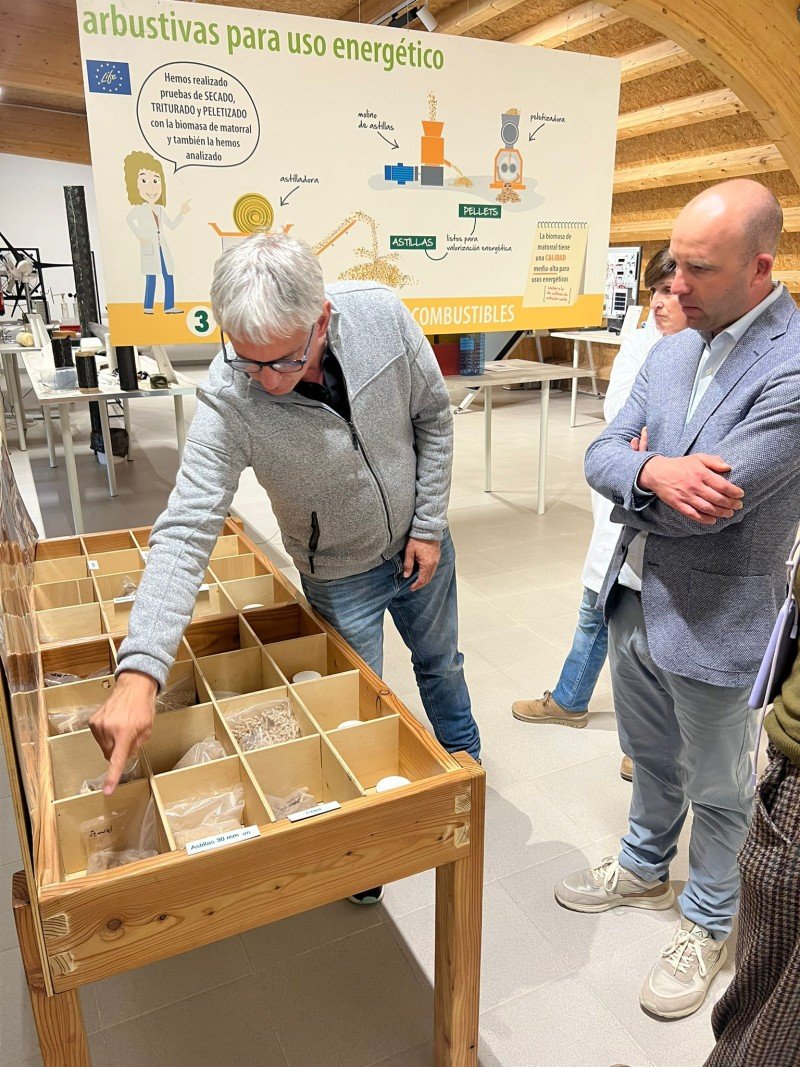
On Tuesday, Nick and Evelien visited CEDER, the national research and training centre for renewable energy in the region. CIFP Pico Frentes works closely with it: sustainable technologies, solar energy and wind power are a natural part of the training offer. This is not a module added afterwards, but a fully integrated part of how the school prepares its learners for tomorrow’s labour market. For Crescendo CVO, which is increasingly receiving questions about green skills, it was an inspiring example of how such a choice can be made concrete.
-800.jpg "WhatsApp Image 2026-05-11 at 13.52.00 (2).jpeg")
Companies as real partners
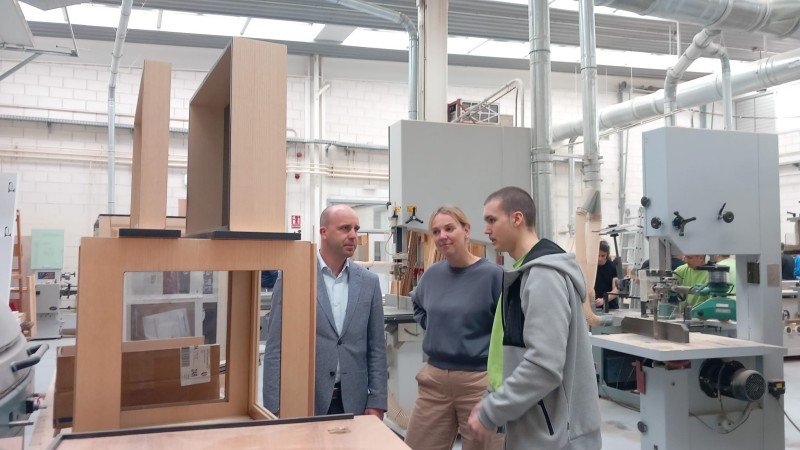
Wednesday and Thursday were largely dedicated to company visits. At CORTABITARTE, a wooden construction company, they saw what long-term collaboration with a school looks like in practice: not only offering internships, but also helping shape training content.
At FICO Mirrors, an industrial company in the automotive sector, a model became visible that goes a step further: the company offers internship places for multiple study programmes at once, both for electrical engineering learners and industrial maintenance learners. One partner, multiple programmes. This makes cooperation more efficient and strengthens the relationship with the school.
A notable side effect of this deep embedding in the business world is the higher employability of graduates. Companies that already know learners from their training recruit more purposefully. The transition from school to work becomes smoother. This is no coincidence, but the result of a deliberate strategy.
-800.jpg "WhatsApp Image 2026-05-11 at 13.52.04 (1).jpeg")
A school that challenges its learners
In addition to company cooperation, several educational choices also stood out. CIFP Pico Frentes works with three clear levels: basic, intermediate and advanced, allowing learners to enter at their own level and follow a clear progression path. Many learners come not only to learn a profession, but also to progress into higher education. The school actively supports this ambition.
The school also works with project weeks in which learners from different fields collaborate on shared assignments. Electrical engineering learners work side by side with automotive mechanics learners. As a result, learners not only develop their own skills, but also learn to collaborate, communicate and value each other’s expertise — exactly the competences companies are looking for. Participation in skills competitions further strengthens this approach.
Familiar yet enriching
Visiting another school also sharpens your view of your own practice. Much was familiar: the importance of personal relationships with company partners, attention to soft skills, and the use of classroom agreements co-created with learners.
At the same time, there are real differences. The target group of CIFP Pico Frentes is on average younger than that of a Flemish CVO, which influences teaching approaches and the possibilities for recognising prior learning. Internships are longer but mainly observational. This differs from the more participatory approach common in Flanders.
But it is precisely these differences that make such a visit valuable. They encourage reflection on choices that are sometimes taken for granted and open the door to new possibilities. Could existing internship partners be asked to collaborate with multiple programmes? How can learners from different fields learn together more often? How can we further develop our offer around sustainable technologies?
These are questions Nick and Evelien brought back from Soria, and which will be further developed in the coming months within Crescendo CVO.
The connection with CIFP Pico Frentes remains warm. Because this visit also confirmed something important: internationalisation is not a one-off project, but a way of working. A school that keeps learning teaches better.