Blog
Spanish Inspectors Visit Crescendo CVO: Learning Together Through Adult Education 23/01/2026
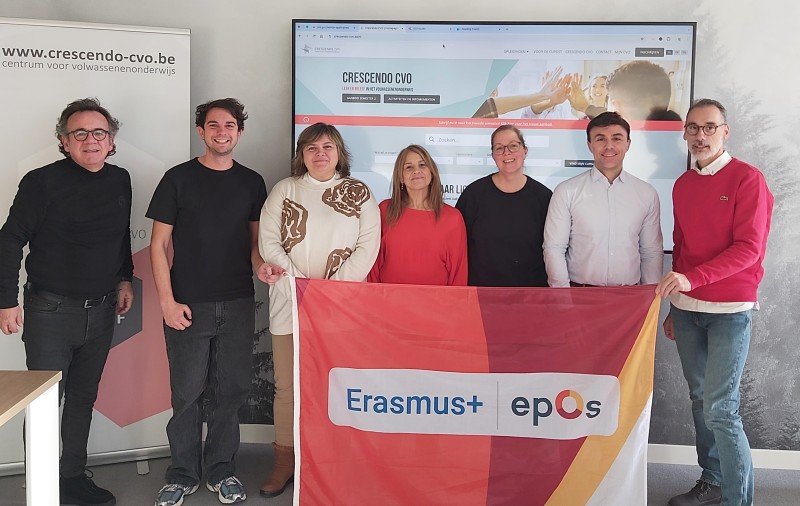
What happens when five Spanish education inspectors spend two days exploring adult education in Flanders? An open and inspiring exchange, where differences prove just as valuable as similarities.
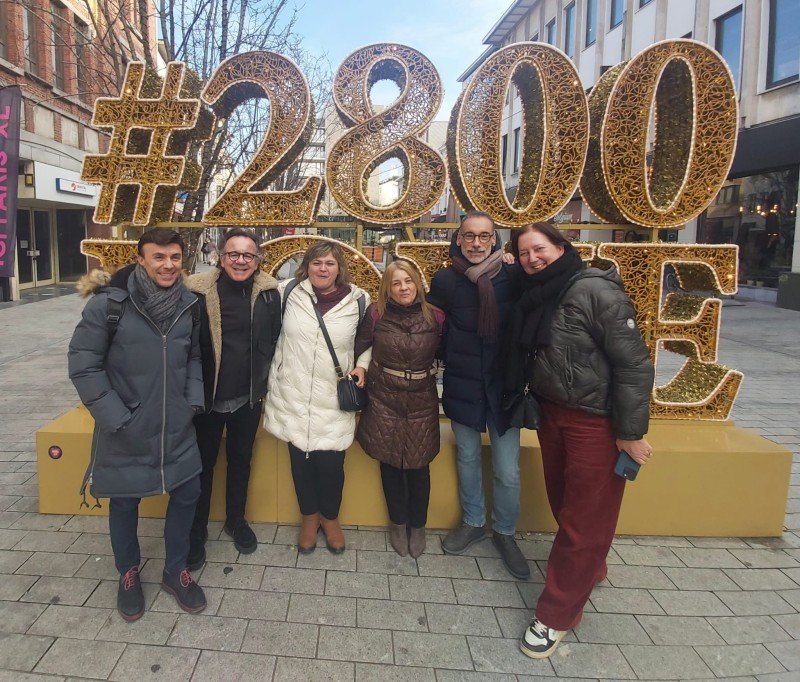
On 21 and 22 January, Crescendo CVO welcomed five inspectors from Castilla-La Mancha as part of an Erasmus+ visit. Their programme started at GO! education, where they received a general introduction to the organisation of adult education in Flanders. They then spent two days immersing themselves in practice at Crescendo CVO and half a day at CVO Brussels.
More autonomy, more opportunities
One of the first things that stood out to our visitors was the high level of autonomy enjoyed by adult education centres in Flanders.
Where the Spanish system is strongly focused on structures and regulations, Flemish centres have more freedom to develop their own identity through projects and partnerships. According to the inspectors, this flexibility creates more opportunities for both centres and learners.
They were also struck by the atmosphere in the classrooms: adults who consciously choose to learn, in a relaxed and respectful environment where learning through experience is key.
Projects that make an impact
Several of our initiatives clearly resonated with the inspectors.
The School and Parents project showed how education can be shaped together with learners.
The bike mechanics project, developed in collaboration with VDAB and Upway, illustrated how training, work experience and social relevance can reinforce one another.
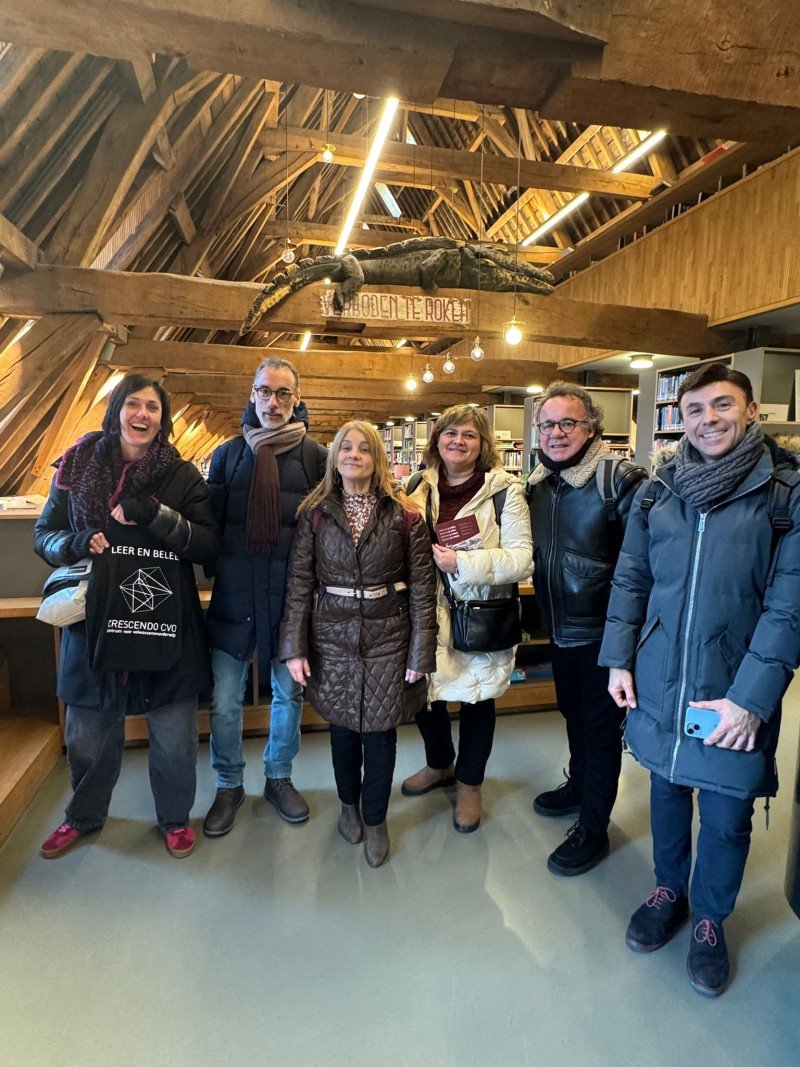
They also appreciated our use of the city and the library as learning spaces, as well as the structured onboarding and follow-up of teachers, designed over a four-semester trajectory.
Digital inspiration
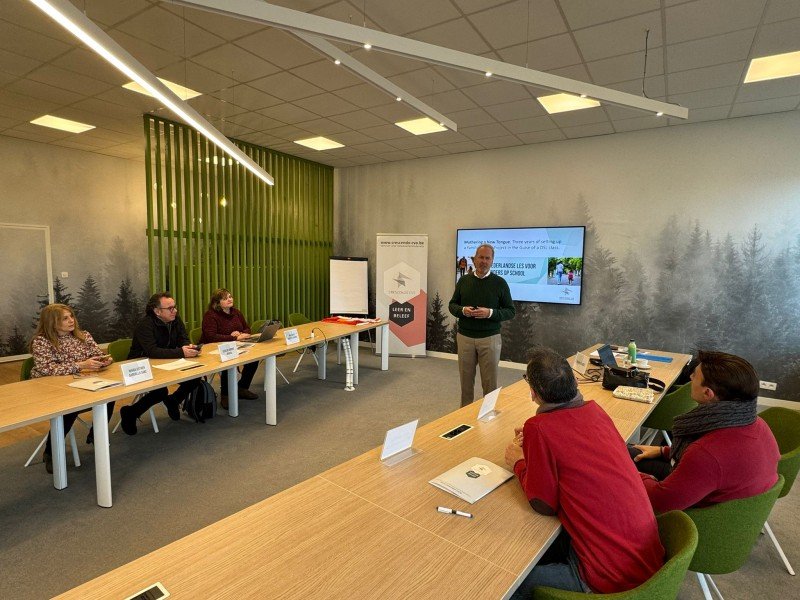
During interactive sessions on quality development and digitalisation, the inspectors actively took part.
The use of AI to support reading skills—where learners create their own stories and practise reading aloud—sparked immediate interest. The “app wheel”, a clear and flexible way of organising digital tools within a school, was another idea they were eager to take home.
-800.jpg "WhatsApp Image 2026-01-23 at 14.23.56 (1).jpeg")
More than a visit
The concluding reflection made it clear that this exchange went far beyond observation. It brought new perspectives, confirmed shared challenges, and opened the door to future collaboration. Topics such as the OKAN system, secondary qualifications in adult education, and educational policymaking were highlighted as areas for further exchange.
When asked to describe the visit in one word, the inspectors chose:
“Friendly.”
A single word that perfectly captures the spirit of this international encounter.